




The Two Men Who Made Everything Else Look Ordinary
For seventeen years — roughly from Ronaldo's debut at Manchester United in 2004 to Messi's final Ballon d'Or in 2021 — football was organised around a binary. Every player assessment, every transfer negotiation, every team-of-the-year selection existed in relation to two men who operated at a level so far above the rest of their era that comparison became almost meaningless. The post-GOAT era is not merely a football question — it is a cultural recalibration of what elite means.
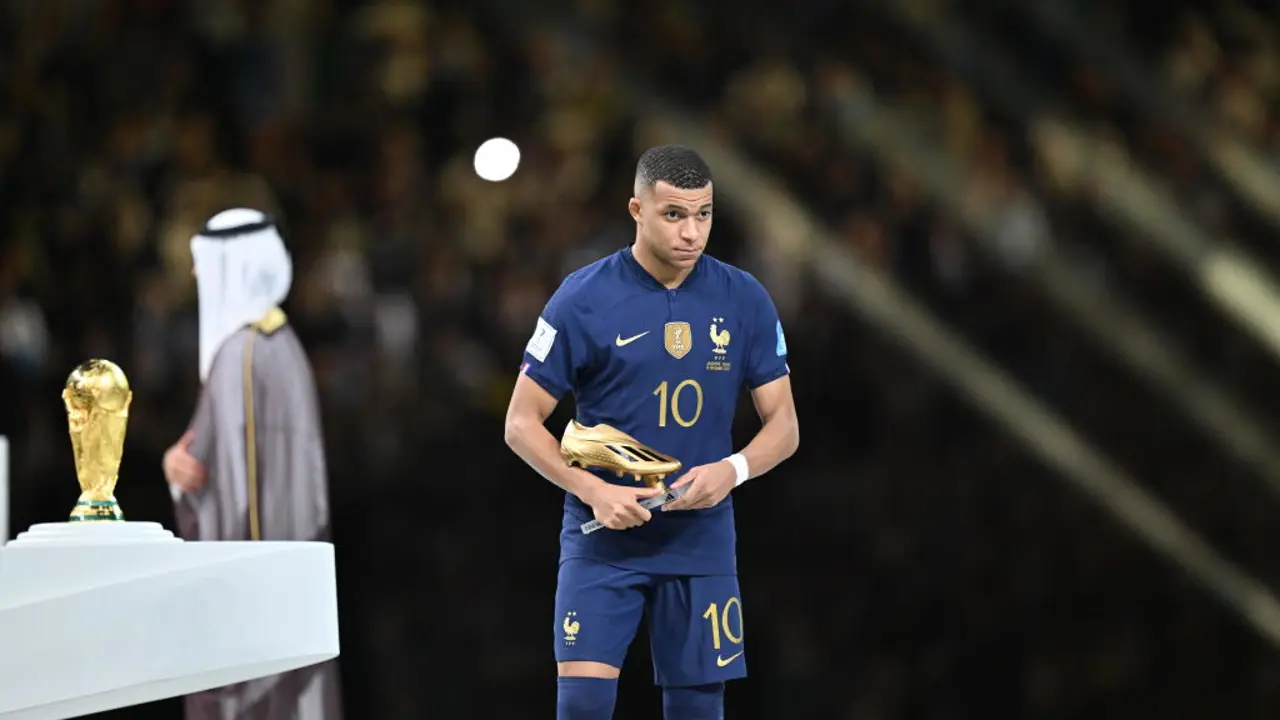
The transition has been gentler than feared. The reason is timing: the players who were always going to inherit the game's highest billing — Mbappé, Bellingham, Pedri, Haaland, Vinicius Jr. — reached maturity at exactly the moment the two greatest players of all time began their gradual withdrawal from the global stage. The throne was never left empty; it was vacated gradually, incrementally, in a way that allowed the next generation's claim to feel earned rather than inherited by default.
- 2023: 1. Vinicius Jr. 2. Erling Haaland 3. Rodri
- 2024: 1. Rodri 2. Vinicius Jr. 3. Kylian Mbappé
- 2025: 1. Jude Bellingham 2. Mbappé 3. Haaland
- Combined Ballons d'Or won by Messi and Ronaldo: 14 (2008–2021)
- Different winners since 2022: 3 in 3 years — first time since early 2000s
- 6 different players finishing top-3 in the award in the same 3-year period
Why There Will Never Be Another GOAT Debate Like That One
The Messi vs Ronaldo argument was unique in sporting history not because both players were exceptional — every era produces exceptional players — but because they were exceptional simultaneously, in the same league, in directly competing clubs, for a decade and a half. The structural conditions that produced the debate — two players of approximately equal greatness, measured against each other repeatedly in the most watched league in the world — are essentially unrepeatable.
The current elite are brilliant, diverse, and distributed across different leagues, positions, and playing styles in a way that prevents the binary comparison from forming. Haaland is a striker; Bellingham is a midfielder; Mbappé is a forward-winger hybrid; Vinicius is a dribbler; Rodri is a defensive anchor. Comparing them is interesting but not generative of the same obsessive cultural argument, because they are not competing for the same position in the same way.
The six years since Messi's final Ballon d'Or win in 2021 have produced three different winners and five players reaching the top three for the first time — the most diverse period of recognition in the award's 70-year history.
"Messi and Ronaldo made the rest of us better by being impossible to match. Now we compete against each other, not against their shadow. That's actually more motivating." — Kylian Mbappé, speaking at the Ballon d'Or ceremony, October 2025
The Players Who Will Define the Next Decade
The genuine argument for a next-era dominant player — if one emerges — centres on Jude Bellingham. At 22, he has already won a Champions League, two league titles across two countries, and a Ballon d'Or. His all-round profile — goals, assists, defensive contribution, leadership, physical dominance — covers every dimension of the midfielder role with a completeness that recalls the era's greats. If he maintains this trajectory across the next decade, the conversation about all-time greatness will eventually reach him.
But perhaps the more interesting possibility is that the game has simply become too tactically collective, too system-dependent, to produce another era of individual dominance. The best teams win because of cohesive systems; the best players within those systems are extraordinary but not singular in the way Messi and Ronaldo were. That might be football's evolution — and it might simply be a gap waiting to be filled by someone we have not yet seen.