




Can Any Team Win Back-to-Back World Cups in the Modern Era?
The history of consecutive World Cup victories is both brief and ancient. Brazil did it in 1958 and 1962; Italy in 1934 and 1938. No team has managed it since the sport became truly global and the resource competition between nations equalised. Argentina's attempt to defend their 2022 Qatar title in 2026 is therefore not merely a sporting challenge — it is an attempt to do something that the last sixty years of football history suggests is essentially impossible.
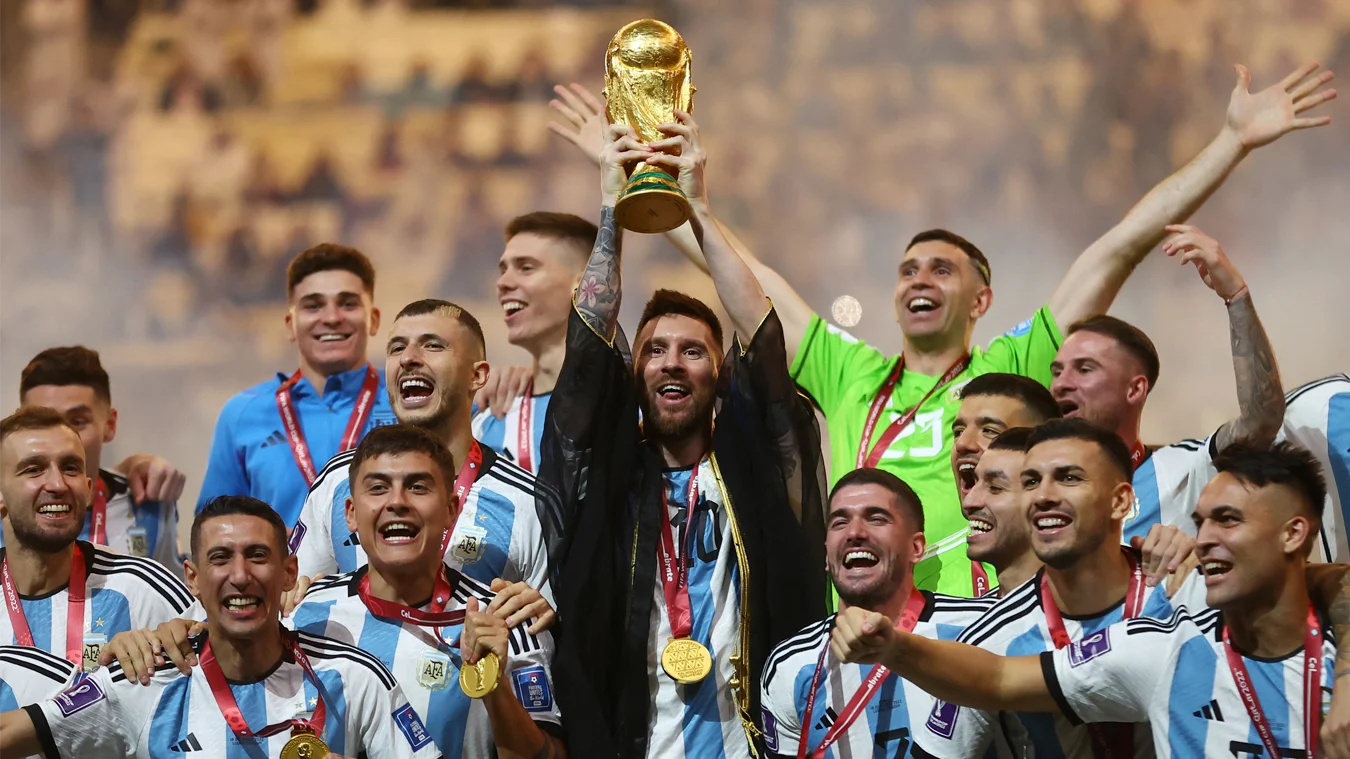
The 2022 triumph under Lionel Scaloni was built on tactical intelligence, defensive cohesion, and the inspirational force of a 35-year-old Lionel Messi playing the greatest tournament football of his career. In 2026, Messi will be 38. The tactical intelligence remains; the defensive cohesion has been preserved and reinforced. The question of Messi's physical capability is the one that Argentina, and the wider football world, cannot answer before the tournament begins.
- Record since WC 2022 win: W27 D8 L3 — best winning % of any major nation
- Messi 2025–26 season: 18 MLS goals in 22 appearances; fitness carefully managed
- Julian Alvarez (Atletico Madrid): 24 goals this season — arguably world-class at 25
- Qualifying: Topped CONMEBOL group with 37 points from 18 games
- Clean sheets in qualifying: 11 — best defensive record in South America
- 6 of Argentina's starting XI from Qatar are still expected to start in 2026
Scaloni's System: Built to Last
What Lionel Scaloni has constructed since 2018 is more durable than any single player, including Messi. The 4-4-2 mid-block that transitions into devastating counters has been refined across four years of competitive matches to the point where it functions almost automatically. Players know their roles, understand the collective pressure triggers, and execute the transition from defence to attack with a speed and precision that most nations cannot replicate.
The system's great advantage is that it is not dependent on any one player performing at their peak. Messi in 2022 was transcendent; a slightly diminished Messi in 2026, still providing quality in the spaces Scaloni carves for him, may be sufficient. The team around him is better than it was four years ago in several positions.
Julian Álvarez has scored in each of Argentina's last 9 competitive appearances. At 25, he is operating at a level that makes him one of the top-five strikers in world football — and he remains largely underrated outside South America.
The Threats to the Defence
Argentina's backline has aged alongside the rest of the squad. Cristian Romero and Nicolás Otamendi remain first-choice, but Romero's injury history at Tottenham is a genuine concern, and Otamendi at 37 will be tested by the pace of tournament football across six potential knockout games. The full-back positions — Nahuel Molina and Nicolás Tagliafico — lack the attacking dynamism of the best in the tournament.
Against a team like France or Brazil who can attack wide with pace, Argentina's defensive vulnerabilities are more exposed than they were in Qatar. The counter-press that protected those spaces in 2022 may not function at the same intensity with an ageing midfield group covering more ground over fewer weeks of preparation.
"Defending a World Cup title is the hardest thing in football. Every team wants to beat you specifically. The pressure is different — not bigger, just different. We are ready for it." — Lionel Scaloni, Argentina national team media day, May 2026
The Messi Factor: Last Dance or Encore?
The 2022 World Cup was widely framed as Messi's last chance for the one trophy that had eluded him. He delivered it with perhaps the greatest individual tournament performance in the history of the sport. Now the framing shifts: is 2026 a victory lap, an unnecessary encore that risks tarnishing the perfect ending, or a genuine attempt to create history as the only player to win two World Cups as the tournament's decisive force?
Messi himself has given nothing away, as is his habit. What is clear is that he remains involved, training with purpose, and that Scaloni has built a tournament structure that could accommodate a Messi playing 60–70 minutes per game at peak intensity rather than 90. The plan is there. Whether the body cooperates is the variable that no amount of preparation can control.