




The Technology That Promised Certainty and Delivered Chaos
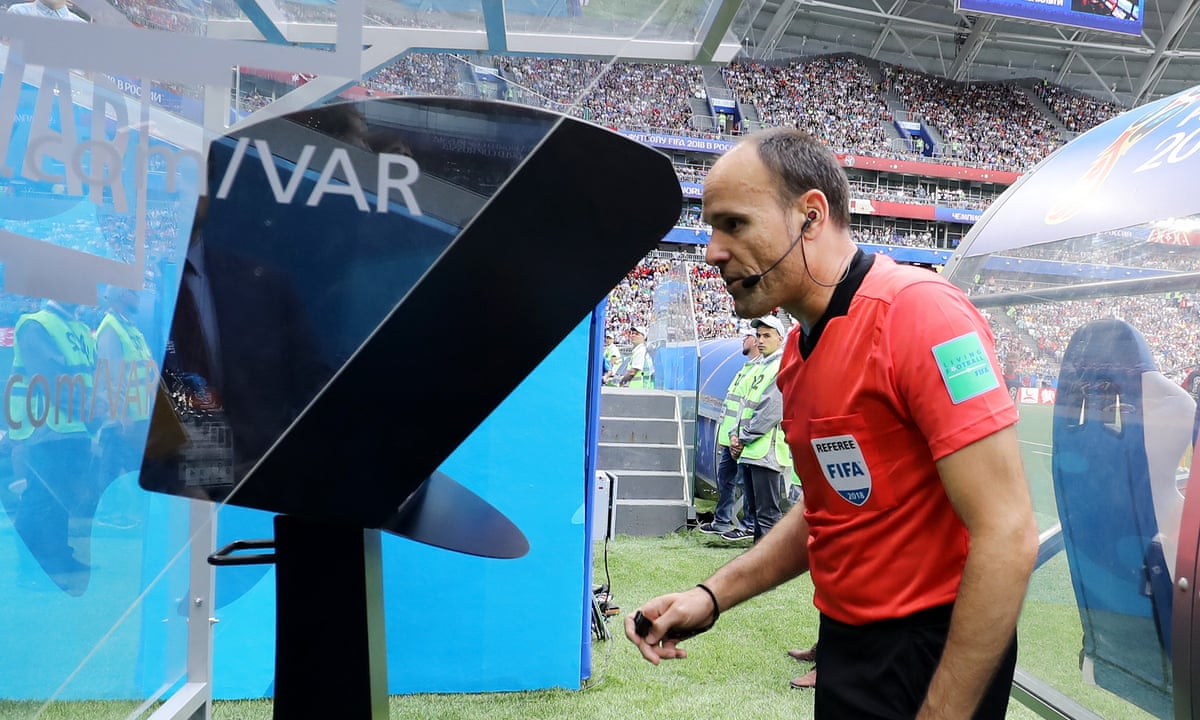
When FIFA introduced the Video Assistant Referee system at the 2018 World Cup, the selling point was simple: eliminate clear and obvious errors. Eight years on, the technology has evolved technically but its fundamental contradiction remains unresolved — the more precisely you measure football, the more you expose the inadequacy of the rules designed to govern it.
At World Cup 2026, VAR will be supplemented by semi-automated offside technology (SAOT), which promises to reduce offside review times from 70 seconds to under 20. But faster decisions on binary questions do not solve the real VAR problem: the subjective judgements at the heart of handball, foul severity, and penalty area incidents that no camera angle can resolve with certainty.
- 22 VAR reviews in the group stage alone — more than any previous tournament
- 9 penalties awarded following VAR intervention
- Average review time: 2 minutes 14 seconds per incident
- 3 red cards overturned on review (all in knockout stages)
- 67% of fans surveyed said VAR "negatively affects their enjoyment" of matches
- Semi-automated offside at Club World Cup 2025: average call time reduced to 17 seconds
The Offside Line That Killed a Thousand Goals
No VAR application has caused more grief than the freeze-frame offside check. A forward's armpit — anatomically incapable of scoring a goal — is deemed offside by a millimetre, wiping out a legitimate strike and the joy of tens of millions of watching fans. The semi-automated system at 2026 will use skeletal tracking (29 body points per player) to make these calls faster, but fast is not the same as right.
The deeper problem is that the offside rule was written in an era before cameras could measure distances to sub-centimetre precision. When the margin of error in the measurement system is smaller than the margin of the rule itself, you have abandoned the spirit of the law entirely.
In 2022, at least 6 goals were disallowed for offsides later measured at under 5 centimetres — a distance invisible to the human eye and meaningless in terms of gaining competitive advantage.
Handball: The Rule Nobody Can Explain Twice the Same Way
Ask ten experienced football coaches to define the current handball rule and you will receive ten different answers. The evolution from "deliberate handball" to "unnatural arm position" to the current hybrid formulation has created a rule so complex that UEFA, FIFA, and national federations have all issued conflicting guidance documents. VAR does not resolve handball controversy — it amplifies it, because the technology forces a definitive decision on an inherently indefinite question.
The 2026 tournament will almost certainly produce at least one knockout-round handball decision that splits opinion globally. This is not a prediction — it is a statistical certainty based on the last three major tournaments.
"VAR was supposed to fix the big mistakes. Instead, it just gives us bigger arguments about smaller mistakes." — Arsène Wenger, FIFA Head of Global Football Development, interview with L'Équipe, March 2026
The Case for Keeping It Anyway
Despite its frustrations, VAR has demonstrably improved certain outcomes. Straight red cards for violent conduct are now rare because players know cameras will catch what the referee misses. Simulation and diving in the penalty area have declined measurably since 2018 in data from all major leagues. The technology has, broadly, reduced the most egregious injustices — the clear penalty not given, the phantom foul at a crucial moment.
The argument for VAR in 2026 is not that it works perfectly. It is that football without it worked worse. The solution is not to remove the technology but to simplify the rules it is asked to enforce — and that requires political will that football's governing bodies have historically refused to provide.