The Question That No Longer Needs Asking
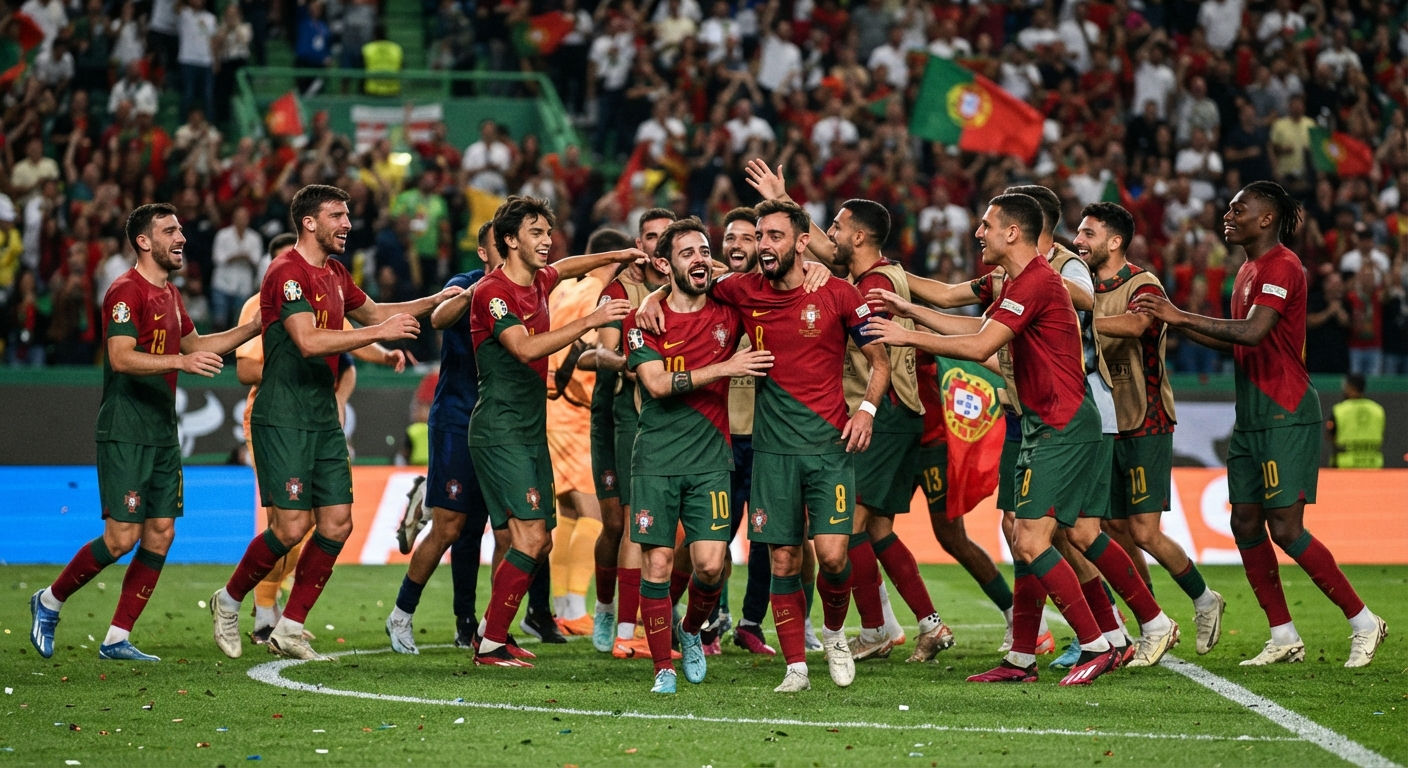
For fifteen years, every tactical conversation about Portugal began and ended with the same question: how do you get the best out of Cristiano Ronaldo? Formation, pressing triggers, defensive shape — all of it was calibrated around protecting and feeding one player, however brilliant he was. Roberto Martínez's Portugal, into the round of 16 at a World Cup being played without their former captain for the first time this century, do not carry that constraint. The relief shows in everything from the fluency of their build-up to the freedom with which the rest of the squad now expresses itself.
Ronaldo's absence is not a gap Portugal are patching over. It is the condition under which a genuinely collective team has been built from scratch. Bernardo Silva, released from his old job as auxiliary playmaker and pushed into his natural free role, is playing the best football of his career at 31, finishing last season with 15 goals and 19 assists for Manchester City. Rafael Leão has gone from an electric but streaky winger into a number ten who can decide a knockout match on his own, arriving in the United States off the back of 22 goals for an AC Milan side he now captains. João Félix, finally at a club in Barcelona that trusts him with a starting shirt, is the wildcard of the group — 18 goals and 14 assists this season, career-best numbers, and a player capable of producing something no scouting report can prepare for.
This is not Ronaldo's old teammates minus Ronaldo. It is a different team entirely.
Numbers That Explain the Shift
The generational handover is written into the squad list itself. Vitinha, 25, has become the metronome of the midfield, completing better than 92 per cent of his passes for Paris Saint-Germain across the season and dictating tempo in a way no Portugal midfielder managed during the peak Ronaldo years, when so much of the team's structure bent toward getting the ball forward quickly rather than circulating it with patience. The average age of Martínez's projected starting eleven is 26.4, three years younger than the side that went out in 2022 — evidence this is not merely Ronaldo's old teammates minus Ronaldo, but a squad rebuilt with a different profile of player in mind.
Qualifying gave an early hint of what was coming: nine wins, one draw, no defeats, and only three goals conceded in ten matches. That is not a group of players missing their talisman and grinding out results. It is a team that looks, for the first time in a generation, more dangerous for not having to organise itself around a single man.
- Qualifying record: 9 wins, 1 draw, 0 defeats, 3 goals conceded in 10 games
- Bernardo Silva: 15 goals, 19 assists for Manchester City last season
- Rafael Leão: 22 goals for AC Milan, now club captain
- João Félix: 18 goals, 14 assists at Barcelona — career-best numbers
- Vitinha: 92%+ pass completion for PSG
- Squad age: average of 26.4 in the projected starting eleven, three years younger than 2022
Martínez's System: Fluidity as the Weapon
The Belgian's tactical signature at Porto and Everton was always a high line and quick vertical transitions. At international level, with more time on the training pitch to embed detail, he has refined it into something more sophisticated. Portugal's 4-3-3 in possession morphs into a 3-2-5, with one full-back tucking inside to form a back three and the other pushing high and wide into the front line. It creates overloads that isolated opposition full-backs cannot deal with alone, and any defensive cover sent to help opens central spaces for Félix or Leão to run into.
That structure demands physically versatile full-backs capable of defending, attacking and reading the picture in front of them almost simultaneously. Nuno Mendes on the left and Pedro Porro on the right give Martínez exactly that combination, and it is why Portugal's width has become as much a defensive asset as an attacking one — a balance the narrower, more individualist build-up play of the Ronaldo era rarely achieved.
"We are not missing one player. We are twenty-six players who understand each other's movements without needing to be told." — Roberto Martínez, Portugal head coach
A Defence That Contradicts the Narrative
The lazy read on this Portugal side is that they have traded steel for style — that removing their most ruthless finisher has turned them into a team that scores more and defends less. The numbers say otherwise. Portugal have kept clean sheets in seven of their last ten competitive matches, a defensive record built on the same collective principle that defines their attack: everyone covers for everyone else, rather than the team bending its shape around the needs of one irreplaceable individual.
Portugal are no longer a supporting cast built around a superstar. They are a team.
What This Means Going Into the Knockouts
Every previous Ronaldo-era tournament run carried the same risk: nullify him, and Portugal's attacking threat collapsed with it. This Portugal side offers no such single point of failure. Opponents preparing for the round of 16 cannot simply mark one man out of the game, because the goals, the creativity and the tempo are now distributed across four or five players who can each individually beat a match on their own. Whether that translates into the deep run Portugal have chased since 2016 remains to be proven on the pitch. But the foundations — younger, faster, more technically coherent, and finally free of the tactical compromises that came with accommodating a single genius — are the strongest this golden generation has assembled without him.