The Project That Refused to Accept Its Limits
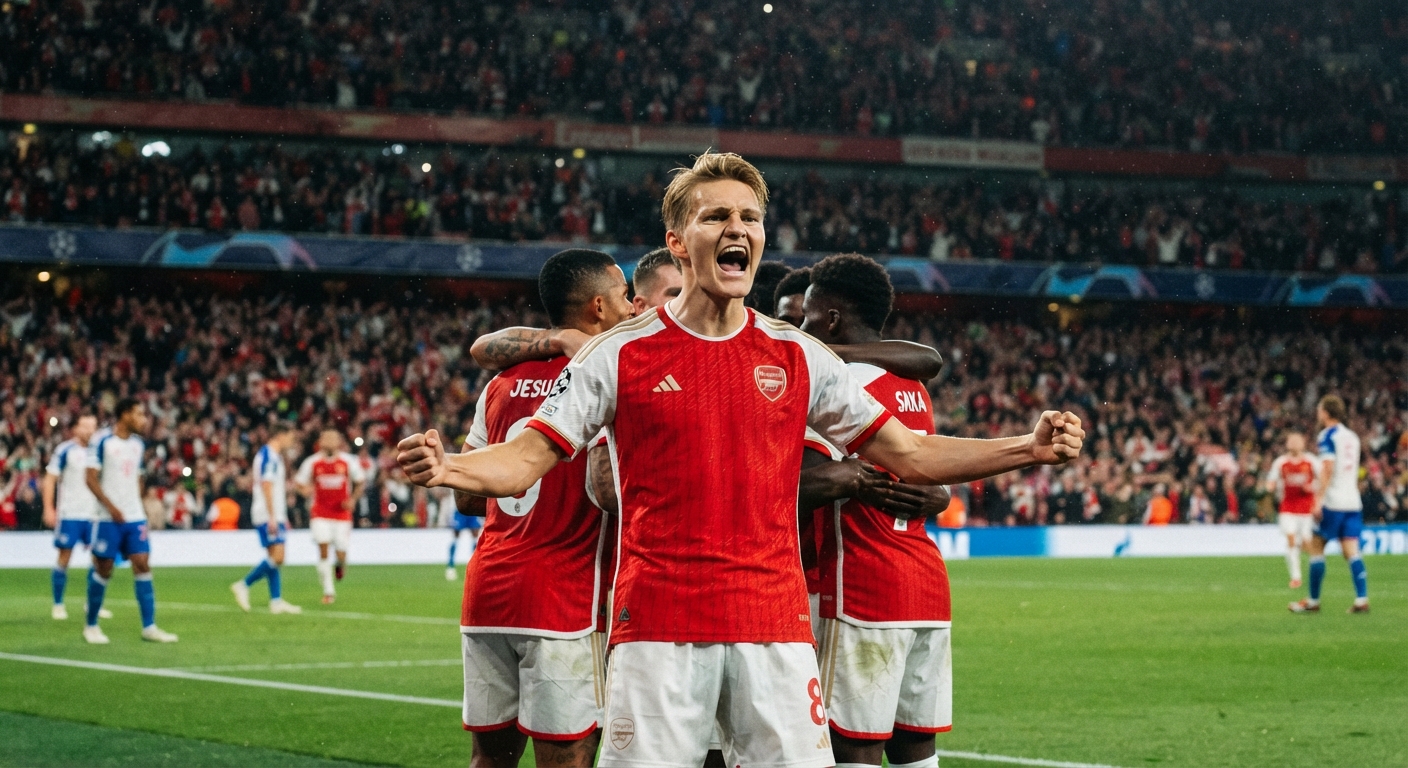
When Mikel Arteta arrived at Arsenal in December 2019, the club had not won the Premier League since 2004 and had not been taken seriously as a Champions League contender in a decade. What followed was patient to the point of exasperating — a fanbase raised on the swagger of the Wenger era forced to sit through relegation-battle finishes and false dawns. Six years on, Arsenal finished as Premier League runners-up for the second season running, and for the first time since 2006 they reached a Champions League semifinal. They did not sneak there. They arrived playing football that made neutrals stop what they were doing and watch.
The exit, when it came, was against Manchester City, who went on to lose the final to Real Madrid — a reminder of how fine the margins are at the top of this competition, and how little separated Arsenal from a place in the showpiece. It stung. But it did not undo what the campaign proved about the identity Arteta has spent six years constructing.
Group-Stage Perfection Set the Tone
Arsenal won all six of their Champions League group games this season, the first time in the club's history they have managed a perfect record at that stage. It was not backs-to-the-wall stuff either. They scored 23 goals across their ten Champions League matches, a shade over two per game, while conceding just seven — one of the two best defensive records in the entire competition. Their expected-goals output sat at 2.7 per game, higher than any other English club involved, a number that reflected genuine control rather than a run of fortunate scorelines.
Arsenal scored more than two goals a game in Europe while conceding fewer than one — control, not luck.
Saka's Best European Season Yet
Bukayo Saka was the individual headline. His eight Champions League goals made him Arsenal's leading scorer in a single European campaign since Thierry Henry in 2004, and he did it while also being asked to combine, press and track back in a system that demands more defensive responsibility from its wide players than most. That he still found the net with that regularity said as much about his conditioning and decision-making as his raw talent, which has never been in doubt since he was a teenager.
- Group stage record: 6 wins from 6 — a club first
- Goals scored: 23 in 10 matches
- Goals conceded: 7 — among the competition's best defenses
- xG per game: 2.7 — highest of any English club
- Saka's goal tally: 8 — best single European campaign since Henry (2004)
- Stage reached: Semifinal, first since 2006
Rice's Reinvention and the Double Pivot
The tactical story of the season was what Arteta did with Declan Rice. For two years since his club-record arrival from West Ham, Rice had operated as a pure defensive screen, breaking up play and recycling possession while others got forward. This season, with Thomas Partey paired alongside a new addition in central midfield, Arteta built a double pivot capable of covering the defensive ground Rice used to shoulder alone. That freed Rice to make the late box runs that had always been part of his game at international level but rarely got used at club level. The result was seven Champions League appearances, three goals and four assists — and eight goals in all competitions, a number that would have been unthinkable for him two seasons earlier.
It was a small structural change with enormous consequences, the sort of adjustment that separates a good manager from a very good one. Arteta had spent two years watching Rice's quality get wasted in a role too narrow for his abilities, then rebuilt the midfield around correcting it. Arsenal's goal tally domestically told the same story: 89 in the Premier League, their highest total since 2012–13, back when Arsène Wenger was still finding ways to make an unfashionable squad play with joy.
"We are not here to make up the numbers anymore. This group knows what it is capable of, and that is the difference now — belief, not hope." — Mikel Arteta, Arsenal manager
A Semifinal Exit That Still Changes the Conversation
Losing to Manchester City in the last four will not be remembered as a triumph, and Arteta knows it. Arsenal have now gone six years without a major trophy under him, and a squad this talented, this well-drilled and this expensively assembled will eventually be judged on silverware rather than style. But something shifted this season that goes beyond one tie against City. Arsenal were not there to make up the numbers, or to be the plucky English side hoping to avoid embarrassment against continental royalty. They set the tempo in games against sides with better recent European pedigree, and more often than not, they won that tempo battle.
Six years without a trophy, and yet nobody in Europe wanted to draw Arsenal in the last eight.
The perfect group stage, Saka's finest European campaign, Rice's transformation into a genuine box-to-box force — none of it will show up in a trophy cabinet this year. But it changes how the rest of the continent sees Arsenal walking into next season. They are no longer the team that needs convincing it belongs among Europe's elite. That argument, whatever happened against City, is over.