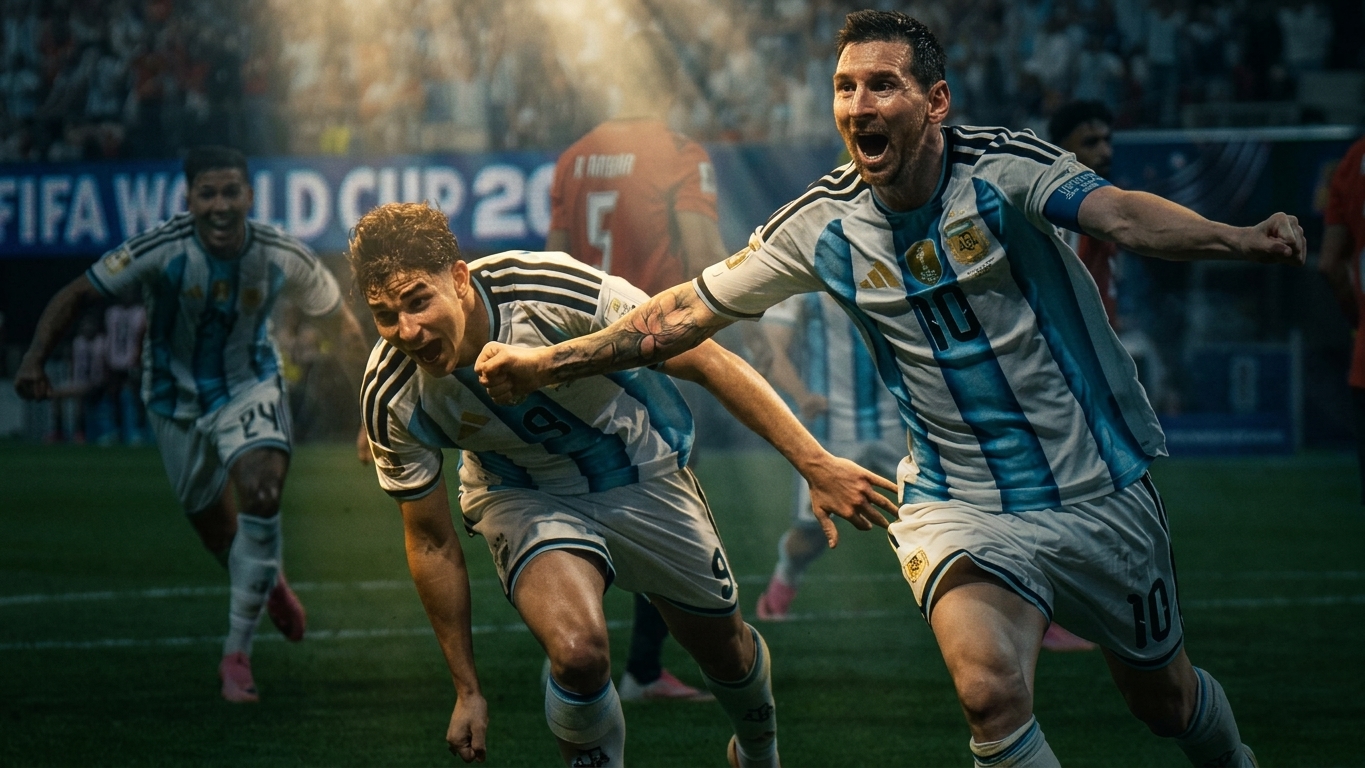
Cape Verde is an archipelago of roughly 500,000 people, ten volcanic islands scattered off the West African coast, and until this tournament it had never appeared at a World Cup. In the group stage it produced a result that is still being replayed weeks later, now that the tournament has reached the Round of 16: a 1-1 draw with Brazil, the competition's most decorated nation, secured by a side ranked 67th in the world against opponents who arrived in North America as one of the favourites to lift the trophy at MetLife Stadium on 19 July.
How the goal came together
Cape Verde did not sit back and hope to survive, which made the result all the more striking. They pressed high in bursts, compressed the space between their lines, and waited for the moment Brazil's back four switched off. That moment arrived just past the half-hour mark. A misplaced pass out from the back was pounced on inside Brazil's own half, and Cape Verde broke with three players against two defenders. The finish was calm rather than desperate, slotted low into the corner as the goalkeeper committed early, and for a few seconds the stadium seemed to freeze before the away end erupted.
A nation of 500,000 people had a five-time World Cup winner rattled for the best part of an hour.
It was the kind of goal that comes from a team that has drilled its transitions relentlessly, knowing that clean chances against a side of Brazil's quality might arrive only once or twice a game. Brazil's response was not immediate. For much of the second half they struggled to find rhythm against a Cape Verde side that defended in a compact mid-block and refused to be dragged out of shape. The equaliser, when it came with twenty minutes remaining, was built through patience rather than inspiration: a series of one-touch passes on the edge of the box eventually opened a half-yard of space, and the finish was clinical. It spared Brazil an outright shock but did nothing to erase the impression that Cape Verde had, for large spells, been the better organised team on the pitch.
A footballing nation built on the diaspora
Cape Verde's rise cannot be explained by domestic infrastructure alone. The islands have a population smaller than a mid-sized European city, and their professional league operates on a fraction of the budget of their continental rivals. What has powered their emergence is the diaspora: an estimated one million people of Cape Verdean descent live abroad, heavily concentrated in Portugal, France, and the Netherlands, and it is from these communities that the national team draws much of its squad. Players raised in the academies of Sporting, Benfica, and clubs across the Portuguese and French lower leagues have opted to represent the country of their parents or grandparents rather than chase caps for the nations where they were born and trained.
- FIFA ranking: 67th in the world
- Result: 1-1 draw with Brazil
- World Cup history: First-ever appearance
- Diaspora population: Around one million abroad
- Key diaspora hubs: Portugal, France, Netherlands
- Population of Cape Verde: Roughly 500,000
That pipeline has transformed Cape Verde from a footballing afterthought into a side capable of qualifying for a first World Cup and then troubling one of its giants. The federation's investment in coaching structure has mattered too. Successive managers have built the team around defensive solidity and directness rather than trying to out-possess technically superior opponents, a pragmatic approach that suits a squad drawn from smaller clubs but coached with real tactical discipline. That night against Brazil was the clearest evidence yet that the model works at the very highest level.
"We did not come here to make up the numbers. Every player on that pitch believed we could hurt them, and for ninety minutes we did." — Cape Verde assistant coach, post-match press conference
African teams making their mark
Cape Verde's draw fits a broader pattern from this World Cup. The expanded 48-team format has given African nations more direct entries than ever before, and several have used the opportunity to announce themselves rather than make up the numbers. Morocco, still riding the credibility earned from their run to the semi-finals in Qatar, have again shown they belong among the tournament's more dangerous outsiders. Smaller footballing nations, given a genuine platform on the largest stage in the sport, have repeatedly shown that gaps in resources do not automatically translate into gaps on the scoreboard.
With the tournament now into the knockout rounds, the group-stage shocks are the games pundits keep returning to when explaining how this World Cup has unfolded. Germany's exit on penalties to Paraguay and the Netherlands falling to Brazil in the last 16 have already reshaped expectations of who the traditional powers actually are in 2026. Cape Verde's night against Brazil belongs in that same conversation: not simply a plucky underdog story, but a data point in a tournament that has repeatedly punished complacency among the game's biggest names.
What it means going forward
For Cape Verde, the draw is already being described at home as the single biggest night in the country's sporting history, bigger than any domestic league result could ever be. For Brazil, it was a warning that their squad, however talented, cannot simply turn up and expect European-style back-four errors to go unpunished. Whatever happens for either side in the rounds that follow, that ninety minutes in the group stage will be remembered as the moment a nation of ten islands proved it belonged on football's biggest stage, not as a guest, but as a genuine competitor.