Three Managers, One Owner, and a Squad in Search of a Plan
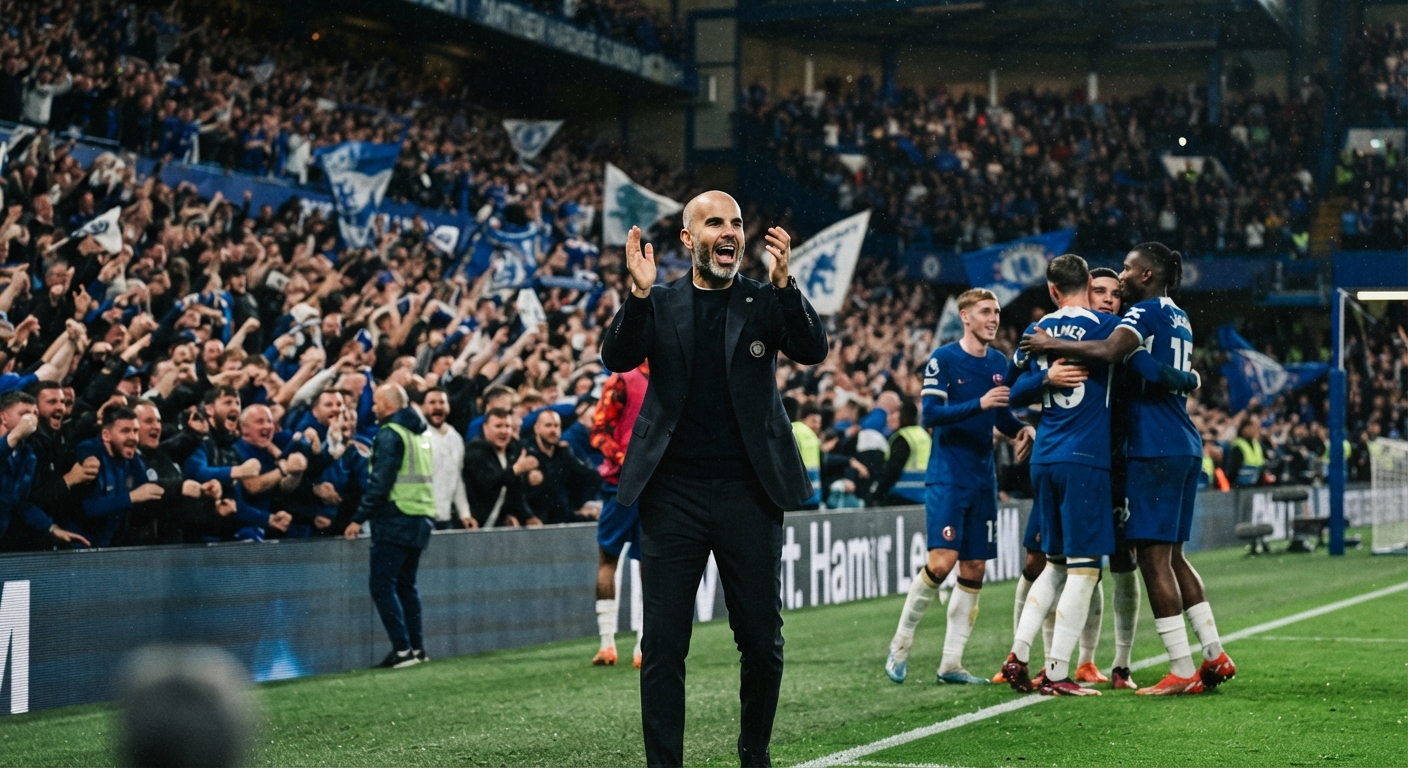
Todd Boehly's ownership spent three seasons and roughly €1.5 billion assembling a squad of extraordinary individual talent that, under three different managers, never cohered into a functioning team. The average age dropped, the technical level rose, and the results stayed maddeningly erratic — brilliant for three games, unrecognisable for the next two, with no consistent thread running through any of it. Enzo Maresca arrived having led Leicester City to the Championship title with a possession-based, positionally rigid style, and found waiting for him the richest unsolved tactical puzzle in English football: a dressing room stacked with attacking talent and almost no shared understanding of how to use it.
His solution was blunt rather than clever. Establish a clear positional framework, demand total adherence from every player regardless of reputation or transfer fee, and accept that the opening months would be painful while a squad assembled for individual brilliance learned to play with structure for the first time. Chelsea's fourth-place finish in 2025–26, built on the most recognisably coherent football the club has produced since Antonio Conte's title-winning side of 2016–17, suggests the approach has worked. It was not glamorous. It was not always convincing to watch in October. But by May, Chelsea looked like a team with an identity rather than a collection of names.
By May, Chelsea looked like a team with an identity rather than a collection of expensive names.
Cole Palmer Made the System Make Sense
Amid a squad full of expensive individual acquisitions, Cole Palmer — signed from Manchester City for £40 million, a fee that already looks like the shrewdest piece of business of Chelsea's post-Abramovich era — became the player around whom Maresca's system found its clearest expression. His movement into the half-spaces, his ability to receive between the lines and produce a decisive pass or shot off either foot, and his composure from the penalty spot made him the creative and clinical hub that previous managers tried and failed to locate among Chelsea's talented but positionally unresolved forward line.
Maresca gave Palmer a role with genuine defensive responsibility — triggering the press from the front in a 4-2-3-1, holding his position when Chelsea were without the ball — that gave the team's shape structure without stripping away the freedom Palmer needed to unlock defences. Twenty-seven goals and 21 assists across the season put him among the names most discussed for the PFA Player of the Year award, and turned him from a promising City reject into the single most important player at Stamford Bridge. Nicolas Jackson, so often a lightning rod for criticism in his first two seasons, finished with 22 goals — the highest total by a Chelsea striker since Didier Drogba's peak years — because Palmer and the wider structure around him finally gave a No.9 service worth finishing.
- League finish: Fourth place, Maresca's first full season in charge
- Net spend under Boehly: Roughly €1.5 billion across three seasons and three managers
- Cole Palmer: 27 goals, 21 assists, signed from Man City for £40m
- Nicolas Jackson: 22 goals — Chelsea's best striker return since Didier Drogba's peak
- Defensive record: Meanest Chelsea defence since the 2014–15 title-winning campaign
- Possession: Second-highest average share of the ball in the Premier League
The Defence That Rediscovered Discipline
The more understated story of Chelsea's season was defensive. A team that had leaked goals through individual errors and positional chaos for three years suddenly looked drilled. Chelsea's back line, protected by a double pivot that Maresca coached relentlessly on cover and rotation, produced the club's meanest defensive campaign since 2014–15. That solidity did not arrive by accident — it came from the same demand for positional discipline that transformed the attack, applied with equal seriousness to the players furthest from goal. Wesley Fofana and Levi Colwill, so often talked about as long-term prospects rather than the finished article, played like a pairing that trusted the system enough to stop guessing.
Possession stats reinforced the picture: Chelsea finished the season with the second-highest average share of the ball in the Premier League, but crucially it was possession with purpose rather than the sterile control that had characterised some of the club's more forgettable performances under previous regimes. Every rotation had a reason. Every pass out from the back was building toward something rather than simply retaining the ball for its own sake, and opposition managers began preparing specifically for a defined Chelsea shape rather than trying to contain a talented but unpredictable collection of individuals.
A Club That Finally Knows What It Is Trying to Be
What Maresca has built is not yet a title-winning machine — fourth place is progress, not a trophy — but it is the first time in the Boehly era that Chelsea's transfer committee and coaching staff have appeared to be working toward the same picture. Players signed for reasons that once seemed scattershot now have defined roles within a single tactical framework, and the squad's academy graduates and marquee signings alike are being asked to solve the same problems on the pitch rather than compete for ill-defined places in a shapeless XI.
"When I arrived, everyone talked about talent. Nobody talked about the picture. My job was to give the players a picture they could all see at the same time." — Enzo Maresca, Chelsea manager
The challenge now is whether Chelsea can build on fourth place rather than simply repeat it. Boehly's ownership has shown patience with Maresca that it never extended to his predecessors, and the club's recruitment over the summer will be the clearest signal yet of whether that patience was justified. For a squad that spent three years accumulating individual brilliance without a plan, the mere existence of one — even an unglamorous, defensively-minded, positionally rigid one — represents the most significant shift in Chelsea's modern history.