Three weeks ago, the group stage draw for the 48-team World Cup was dismissed by some as a watered-down format built to protect the elite. The knockout rounds have made a mockery of that theory. Germany are out, beaten on penalties by Paraguay. The Netherlands are out, beaten by Brazil. Both eliminations trace directly back to groups that looked containable on paper and turned violent in practice. The Round of 16 is now exposing exactly what those three weeks of group football actually did: it built a bracket where nobody arrived rested, nobody arrived unscarred, and the traditional hierarchy of world football took a beating before the tournament had even reached its knockout business end.
The Group of Death Theory Was Not a Myth
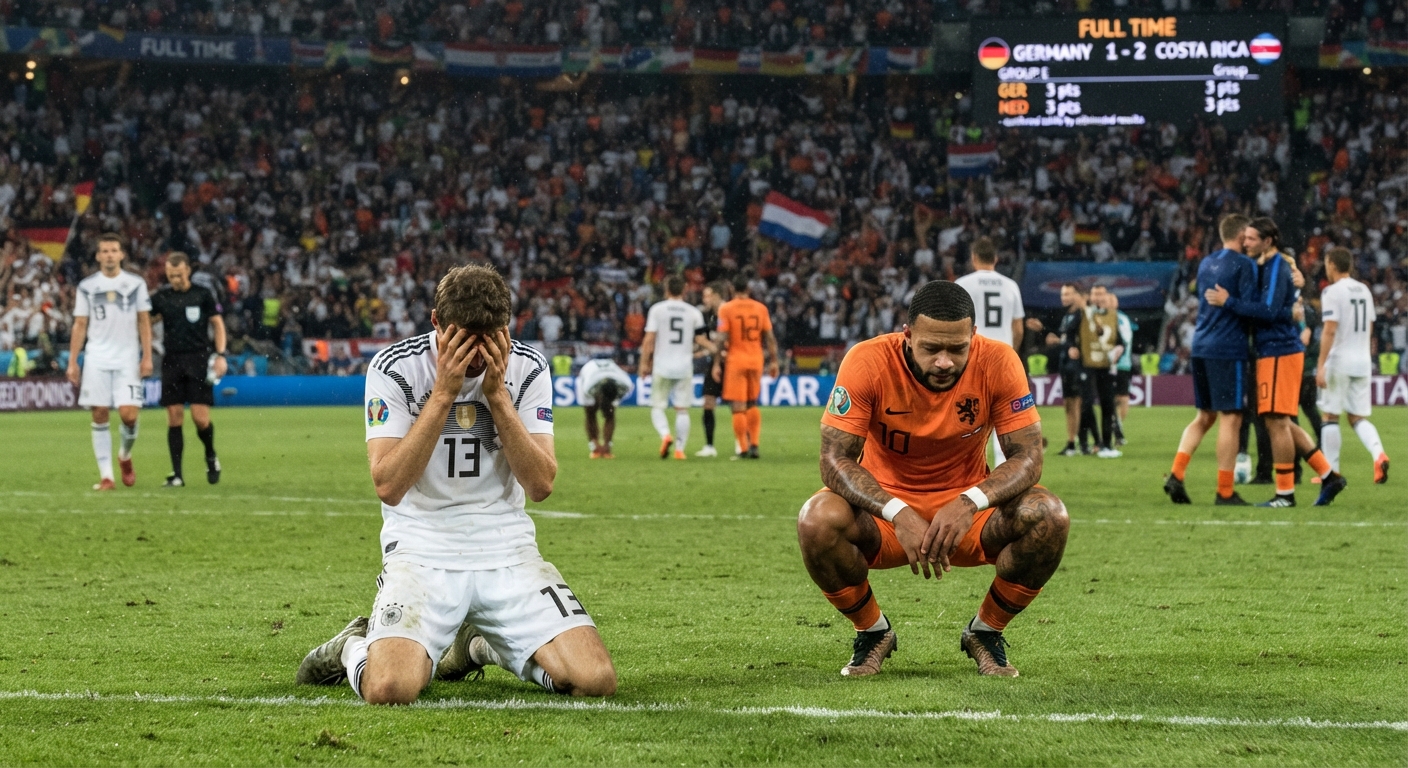
Every World Cup produces a group that chews up a side capable of winning the whole thing, and 2026 delivered several. The expanded format was supposed to soften the blow by rewarding the top two automatically and offering a lifeline to eight third-placed sides, but that safety net only matters if a team survives its group in reasonable shape. Germany did not. Whatever went wrong in their group stage left them fragile enough that Paraguay, a side built on organisation rather than star power, could push them to penalties and win. That is not an anomaly. It is the exact scenario FIFA's own seeding committee worried about when they widened the pots to fit 48 teams: a Pot 2 or Pot 3 nation with nothing to fear, playing with the freedom that comes from being written off in advance.
Nobody arrived at the knockouts rested, and the traditional order of world football paid the price for it.
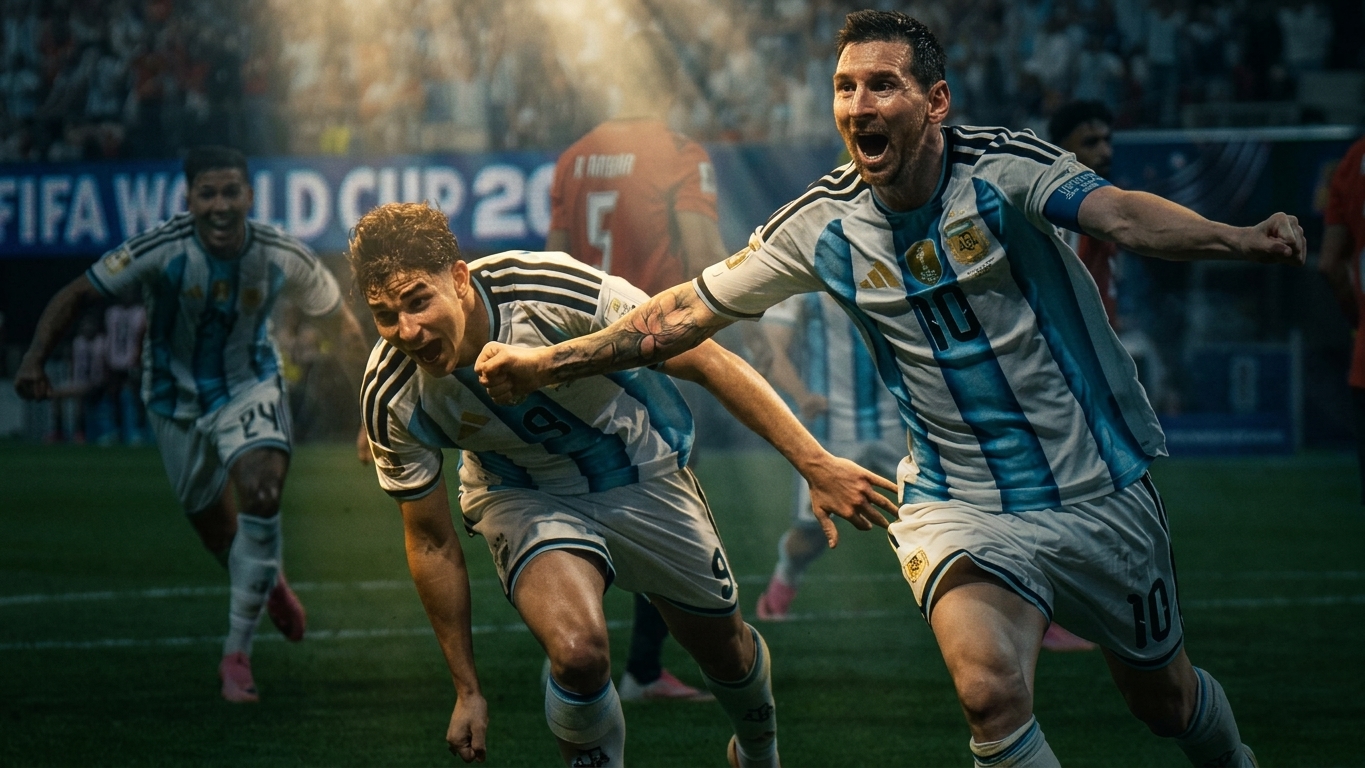
The Netherlands' exit against Brazil tells a similar story from a different angle. Ronald Koeman's side have looked laboured for stretches of this tournament, never quite finding the control in midfield that carried them through recent cycles. Brazil, by contrast, arrived at the knockouts with genuine claims to being the form team in the competition, and Vinicius Junior has been central to that. His brace against Serbia in the group phase was not a one-off; he followed it with another goal in the 3-0 demolition of Scotland, a performance that suggested Real Madrid's Champions League final win over Manchester City in May did nothing to tire him out and everything to sharpen his confidence. Brazil's group stage was supposed to be a formality. Instead it doubled as a statement.
- Germany: eliminated on penalties by Paraguay in the Round of 16
- Netherlands: eliminated by Brazil in the Round of 16
- Vinicius Junior: brace vs Serbia, plus a goal in the 3-0 win over Scotland
- Scotland: lost 3-0 to Brazil in the group stage
- England: beat Croatia 4-2, drew 0-0 with Ghana, through to the Round of 16
- Format: 48 teams, first World Cup at this scale, hosted by USA, Canada and Mexico
Scotland's Reality Check
Scotland's tournament included the sternest possible introduction to what a group of death actually feels like from the wrong side of it. A 3-0 defeat to Brazil, in a group that also contained Serbia, was always the likely outcome on paper, but the manner of it mattered. Steve Clarke's side were competitive in patches across the group stage without ever threatening to turn a good performance into points against the group's genuine contenders. That is the trap the format was built to punish gently rather than harshly — Scotland's participation alone, at a first World Cup in decades, was itself the achievement — but it is also proof that expansion has not diluted quality at the top end of the draw. Brazil in this group were exactly as difficult as the name suggested.
"You can talk about a bigger tournament diluting the standard all you want. Tell that to the eight teams from a 32-team era who wouldn't have got near this bracket and are now through to the last sixteen." — European federation technical director, speaking on the format's early impact
England Found the Least Dramatic Route Through
Contrast all of that with England's passage, which was almost businesslike by comparison. Thomas Tuchel's side beat Croatia 4-2 in a game that had control and chaos in equal measure, then followed it with a goalless draw against Ghana that looked, at the time, like a side managing risk rather than chasing a statement. Four goals against a nation with Croatia's pedigree in this competition is not something to undersell, even accounting for Croatia's declining generation. Harry Kane's captaincy has provided the calm thread through a group stage that, for everyone else, felt increasingly unstable. England reached the Round of 16 without the drama that consumed Germany, the Netherlands or Scotland, and in a tournament defined by shocks, dullness has been an underrated route to survival.
What the Casualties Actually Prove
Strip away the shock value and a pattern emerges. The teams still standing at the Round of 16 are not simply the biggest names — they are the ones who managed their group stage rather than merely winning it. Brazil didn't just beat Scotland and Serbia; they left the group sharper and more confident than they entered it, Vinicius Junior carrying club form straight into international football. England didn't dazzle against Ghana, but they didn't need to. Germany and the Netherlands, by contrast, both leaked something in the group phase that never got repaired before the knockouts arrived, and elite squads with major tournament pedigree found that pedigree counts for nothing once the legs and the belief have gone.
That is the real lesson of this expanded format, three weeks and one round of knockouts in. A 48-team World Cup was always going to produce more group games, more permutations, and more chances for a supposedly lesser side to catch a giant cold. What it has actually produced is starker than that: it has shown that survival now depends less on reputation and more on whichever squad leaves the group stage still able to run. Germany and the Netherlands couldn't. Brazil and England could. The knockouts, so far, are simply confirming what three weeks of group football already decided.