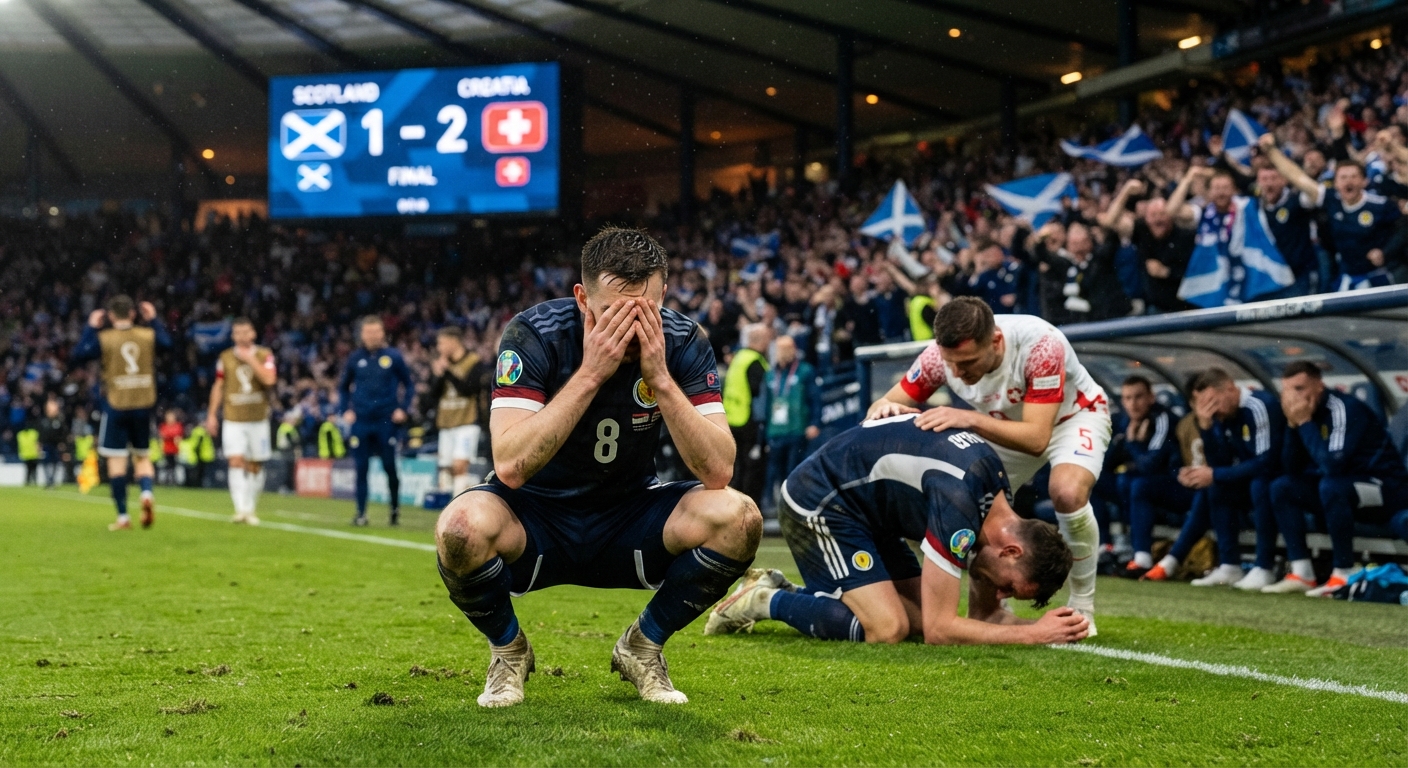
Scotland's World Cup is over, and it ended the way most of their tournaments have ended for the last three decades: close enough to taste it, then gone. The 3-0 defeat to Brazil in their final Group G game wrecked a goal difference that was already fragile, and when the rest of the group's results settled, Steve Clarke's side found themselves outside the eight best third-placed teams in the 48-team draw. The wait for a first knockout appearance since 1998 goes on.
Vinicius made the difference look easy
There was no shame in losing to this Brazil team, but there was a lesson in how comprehensively it happened. Vinicius Jr. scored and tormented Scotland's right side for ninety minutes, pulling defenders out of position and inviting runners in behind them. It capped a tournament in which the Real Madrid forward had already scored a brace against Serbia — Scotland were simply his latest victim. Scotland's back three, so often the platform for their best results under Clarke, had no answer for a forward playing with that much confidence and that little regard for the occasion. By the time the third goal went in, the game had stopped being a contest and started being an exhibition.
Three points, minus three goal difference, and a coin-flip Scotland lost.
That scoreline left Scotland with a goal difference of minus three and three points from their group, a combination that gives a team roughly a coin-flip's chance of sneaking through as one of the best third-placed sides in a 48-team tournament. Scotland lost that coin-flip. Other results elsewhere in the groups went against them, and the arithmetic that had kept their hopes alive for a few tense hours after the final whistle eventually closed the door.
- Result vs Brazil: 3-0 defeat, Vinicius Jr. among the scorers
- Final goal difference: minus 3 in Group G
- Points earned: 3 from three group games
- Last knockout appearance: 1998 World Cup
- Standout performers: Billy Gilmour, Nathan Patterson
- Format: 48-team tournament, top eight third-placed sides advance
A tactical plan that ran out of road
Clarke built this Scotland side on a 3-5-2 that has served them well against European opposition of similar or slightly higher quality — organised, patient, dangerous on the counter through wing-backs pushing high. Against Brazil's fluid front line, the same shape looked a size too small. The wing-backs were pinned back rather than pushed forward, the double pivot in midfield spent most of the match chasing shadows, and the two strikers were starved of the service that usually keeps Scotland competitive even in games they're expected to lose.
It wasn't a one-off problem. Scotland struggled throughout this tournament whenever the opposition had genuine pace and improvisation in the final third, and Brazil simply had more of both than anyone else they faced. Clarke's tactical trademark — compactness, discipline, a low block that dares teams to break it down — works best against sides that are patient. It works far less well against teams that can beat you in transition, and increasingly, that's the kind of opponent Scotland need an answer for if they're going to close the gap between credible tournament participant and genuine knockout team.
"We came here to compete, and for large parts of this campaign we did that. Brazil showed us the gap that still exists at the very top, but I don't think this squad should hang their heads." — Steve Clarke, Scotland manager
What Scotland actually gained from this campaign
None of this is to say the tournament was worthless. Billy Gilmour continued to look like a genuine international-class midfielder, controlling tempo in games where Scotland had the ball and covering ground in games where they didn't. Nathan Patterson got minutes at a World Cup at an age when that experience compounds — the pace of the tournament, the size of the occasion, the specific discomfort of playing against a front line as gifted as Brazil's. Those are the kinds of afternoons that either break young players or sharpen them, and everything about how Patterson and Gilmour conducted themselves suggests the latter.
There's also a broader point about where Scotland sit in the world game right now. They qualified for a World Cup, which alone is not a given for this generation of players — ask anyone who watched the barren stretch between 1998 and Clarke's appointment. They were competitive, if not victorious, against opposition ranked comfortably above them. The gap to the very best sides remains wide, as Brazil demonstrated with brutal efficiency, but the gap to mid-table tournament sides has narrowed. That's progress, even if it doesn't show up in the only column that ultimately matters.
The wait goes on
Scotland will fly home from the United States, Canada and Mexico with the same unwanted statistic they arrived with: no World Cup knockout football since 1998, a run now stretching well beyond the careers of players who weren't even born when it started. Clarke's contract situation and the make-up of this squad in four years' time are questions for another day. For now, the story is the same one Scotland have told themselves after tournament after tournament — competitive, occasionally thrilling, ultimately undone by the numbers. Brazil move on to face whoever survives the round of 32. Scotland go home to ask, again, what it will take to get over the line.