A Continent Built for One Tournament
Nobody was ever going to host a 48-team World Cup alone. Squeezing 104 matches into roughly a month demanded stadium capacity, hotel inventory, training bases and transport links on a scale that ruled out almost every solo bid on the planet. FIFA's solution was to split the tournament three ways across the United States, Mexico and Canada — the first World Cup ever shared by three countries. Now the competition has reached the Round of 16, and the arrangement that once looked like a logistical headache is holding together far better than the sceptics predicted.
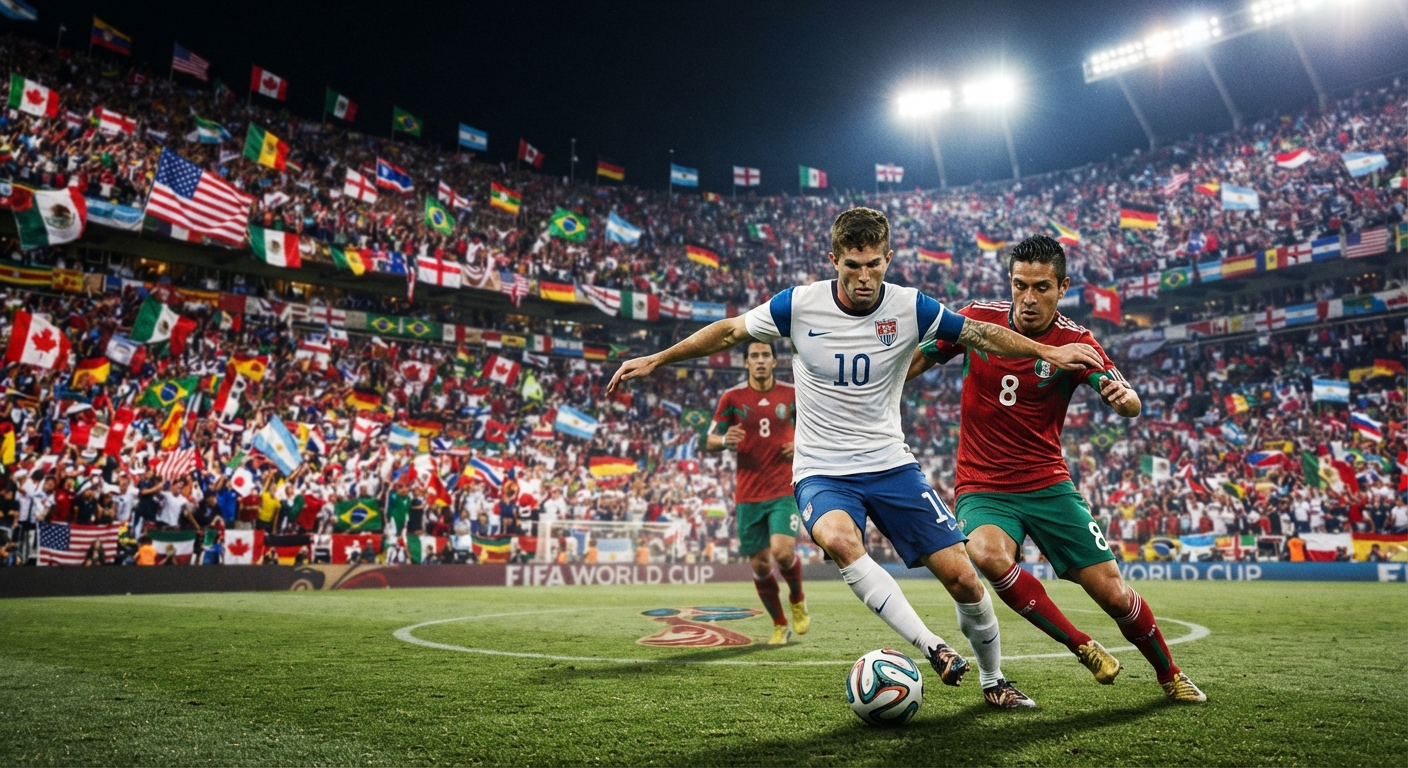
The politics were never going to stay off the pitch entirely. US-Mexico relations carry decades of tension no broadcast graphic can smooth over, and a Mexican side walking out in a US stadium was always going to carry subtext. Football has mostly done what it usually does — drowned the noise once the whistle goes — but the symbolism of three neighbours sharing the world's biggest sporting event has been unmissable on every matchday since the opener.
The United States: Money, Market, MetLife
The US arrived with commercial muscle its co-hosts simply could not match. A $1.5 billion American television deal helped underwrite FIFA's four-year operating budget, and US production expertise gave this tournament a broadcast polish earlier editions lacked. Eleven US cities are staging matches, spanning established soccer towns like Seattle and Portland and Sunbelt markets — Dallas, Atlanta, Miami — where the game has grown fastest since the country's last hosting turn in 1994. The final lands at MetLife Stadium in New York on 19 July, the tournament's financial and symbolic capstone.
That 1994 edition generated roughly $450 million in US World Cup merchandise sales. Analysts now project 2026 could produce six times that figure once digital commerce and three decades of inflation are folded in — a blunt measure of how much bigger, and more lucrative, this version of the event has become.
Three countries, sixteen cities, one trophy — and so far, no single host has broken the tournament.
Mexico: Experience Wearing a Fresh Coat of Paint
Mexico is hosting World Cup football for a third time, after 1970 and 1986, and that pedigree shows in how smoothly its three venues — Mexico City, Guadalajara and Monterrey — have functioned. The rebranded Estadio Azteca remains one of the sport's true cathedrals, and Mexican crowds have brought an intensity to games there that visiting supporters keep calling the loudest atmosphere of the tournament. Where the US supplies capital and Canada supplies novelty, Mexico supplies tournament know-how — decades of staging experience condensed into three cities that simply know how this works.
- Host cities: 16 across three countries — 11 in the US, 3 in Mexico, 2 in Canada
- US TV deal: $1.5 billion, underwriting FIFA's four-year budget
- Mexico's hosting history: third World Cup, after 1970 and 1986
- 1994 US merchandise sales: roughly $450 million
- 2026 projection: up to six times that figure
- Final: MetLife Stadium, New Jersey, 19 July
That experience has paid off practically, not just symbolically. Mexican organisers were the ones who had already solved problems neither the US nor Canada had faced — managing altitude at the Azteca, marshalling fan marches through dense city centres — and officials running legs of the tournament north of the border have quietly borrowed those answers rather than relearn them from scratch.
Canada: First-Timers, Growing Pains and All
Toronto and Vancouver are staging World Cup matches for the first time in Canadian history, and it has shown in both flattering and awkward ways. BMO Field's expansion and Vancouver's retrofitted stadium have both drawn genuine praise for matchday presentation, but ticket pricing and transport planning came in for criticism during the group stage from travelling fans used to the denser infrastructure of Mexico City or the sheer scale of the biggest US markets. None of it has been catastrophic — Canada's issues have been the ordinary growing pains of a first-time host rather than anything threatening the tournament itself.
"You can feel this is a country hosting its first World Cup — the enthusiasm is real, but so is the learning curve. Give them another cycle and Toronto and Vancouver will run this like veterans." — Bev Priestman, former Canada national team manager
What the Knockouts Have Proven
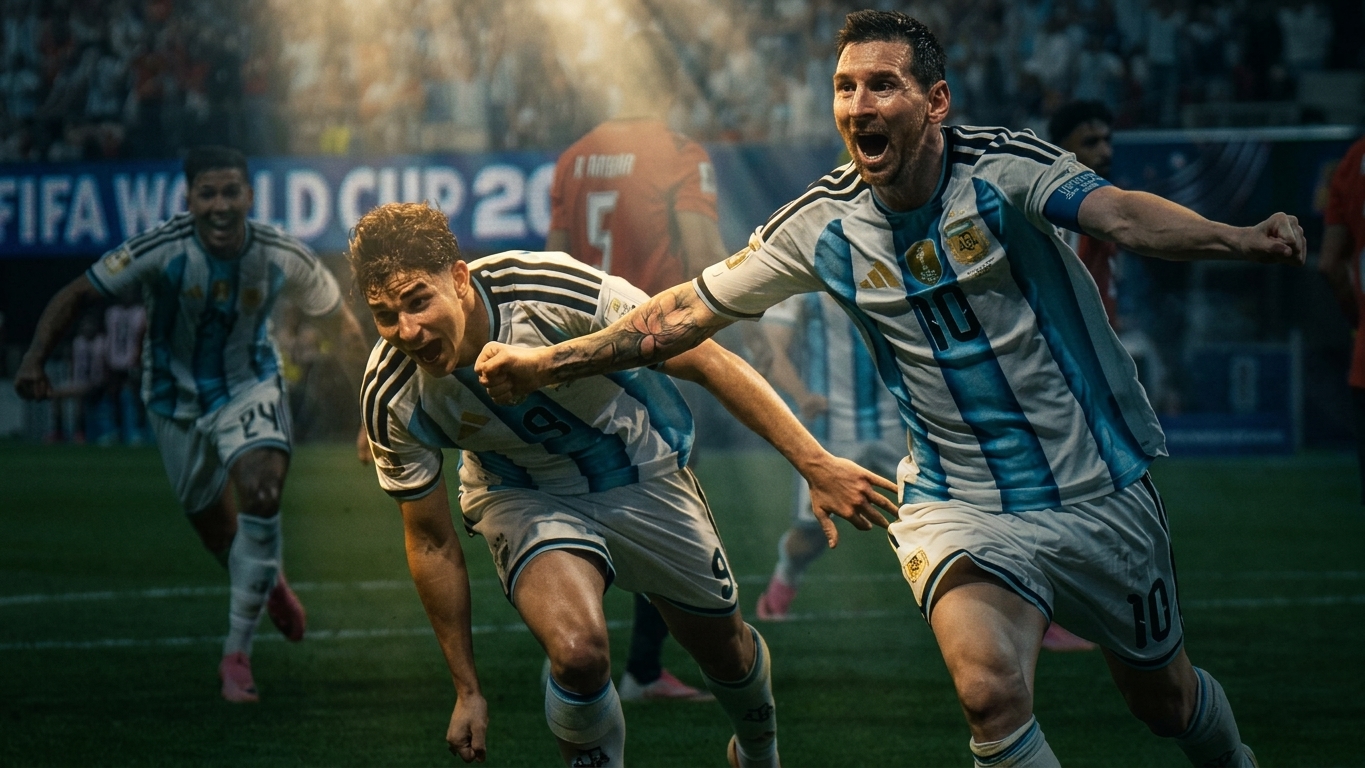
Reaching the Round of 16 without a single host-city meltdown is, in itself, the verdict on this experiment. Fans have crossed three borders to follow their teams — sometimes within the same week — and the competition has kept moving. The knockout drama has been happening on the pitch rather than in the logistics: Germany fell to Paraguay on penalties, the Netherlands went out to Brazil the same way, and Vinicius Jr has been the individual story of the tournament so far, scoring against Serbia and Scotland en route to Brazil's last-16 place. England's run under Thomas Tuchel, with Harry Kane as captain, has added its own transatlantic subplot, with the team moving between US venues that were, until three years ago, purely NFL and MLS territory.
The bigger test still lies ahead. Concentrating the quarter-finals, semi-finals and final in the US will strip away some of the three-nation texture that has defined the group stage and Round of 16, and it will put America's infrastructure — rather than the shared arrangement — under sole scrutiny for the tournament's biggest matches. But the foundational bet FIFA made in splitting hosting duties three ways has already paid off. A World Cup too big for any one country found three that, between them, could carry it.